I needed a testing ground.
After years of working in marketing operations (building systems, recommending tools, and implementing strategies for employers and clients) I realized I was doing everything on their platforms. If something broke, it broke on their site. If I wanted to experiment with a new AI optimization strategy or test an automation workflow, I had to wait for the right opportunity at work or hope a client project aligned.
That felt backward.
So I built this Digital Studio: a place where I can break things safely, validate strategies before recommending them, and document what actually works (and what doesn't). It's my portfolio, sure, but more importantly, it's my laboratory.
Now when I want to test an automation workflow or experiment with AI optimization, I have my own platform to try it on first. If it breaks, only my site suffers. If it works, I have proof of concept I can point to.
Beyond testing, owning my digital presence was essential. It gives me control over my narrative, flexibility in what I share (both professional and personal), and allows work to compound over time. Everything stays organized and accessible long-term.
The result is both my testing ground and my portfolio. I validate marketing ops strategies here, showcase work from across my career through case studies, and document what I'm learning in real-time. It's where I build, learn, and connect in public, and where I'm starting to attract the type of freelance work I actually want to do.
Before building anything, I needed to answer: What is this for?
I identified five purposes:
These weren't arbitrary. Each solved a specific challenge. No testing ground = recommending untested tools. No portfolio = no proof.
I'd worked extensively with Webflow in my last role, collaborating with developers and managing the strategy behind complete website builds, so I knew the platform's capabilities. But I'd never actually built a site myself.
That turned out to be fine. Webflow's designed for people like me: strategic thinkers who understand what needs to happen but don't write code. The drag-and-drop interface made sense immediately, and whenever I got stuck, Webflow University had tutorials that were both informative and surprisingly entertaining.
I set up collections for case studies and blog posts, built some basic templates, and realized publishing new content would take minutes instead of wrestling with HTML every time. That alone made it worth it.
This is where most people skip ahead and start designing. I forced myself to map everything first:
I also figured out my content strategy: lead with real problems I solve, document actual process (including failures), and share personal interests without overthinking it.
The Personal Hub (movies, billiards, coffee snobbery) would come post-launch. I wasn't going to let "perfect" kill "done."
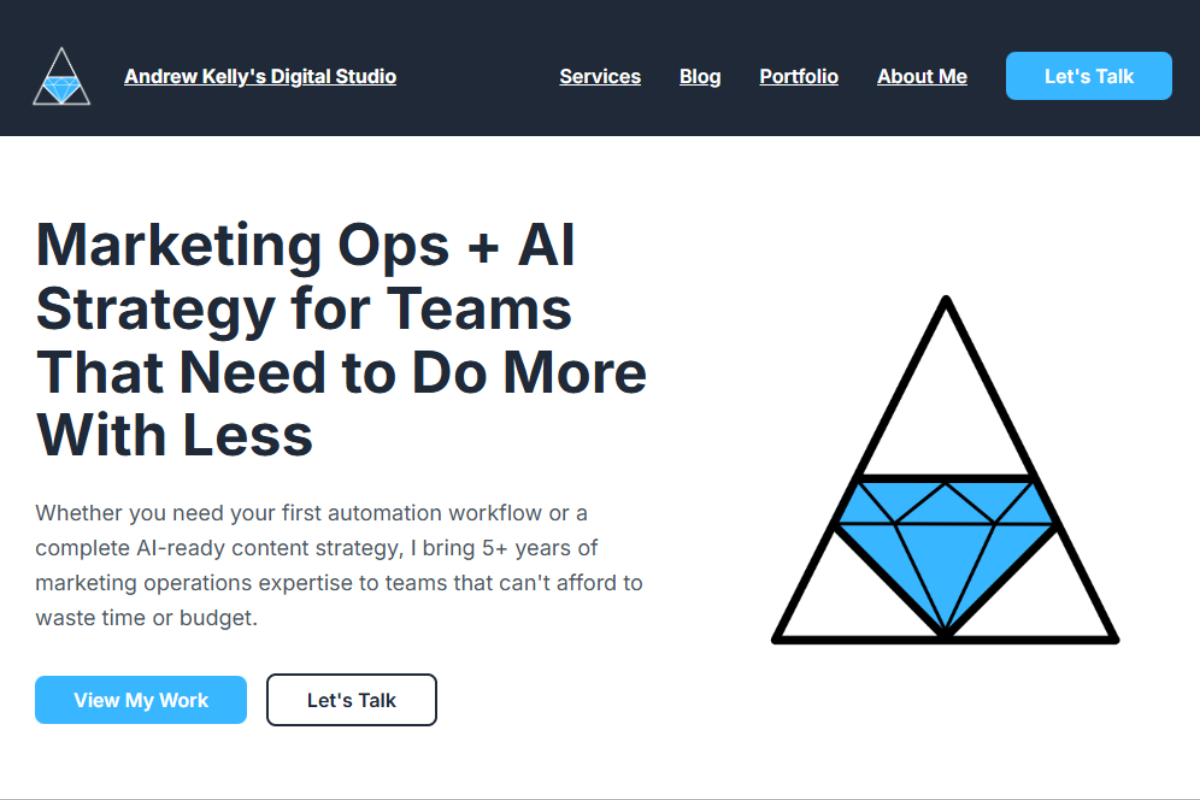
I designed my logo in Canva, my initials A and K forming a diamond in the middle. Simple, clean, and my own.
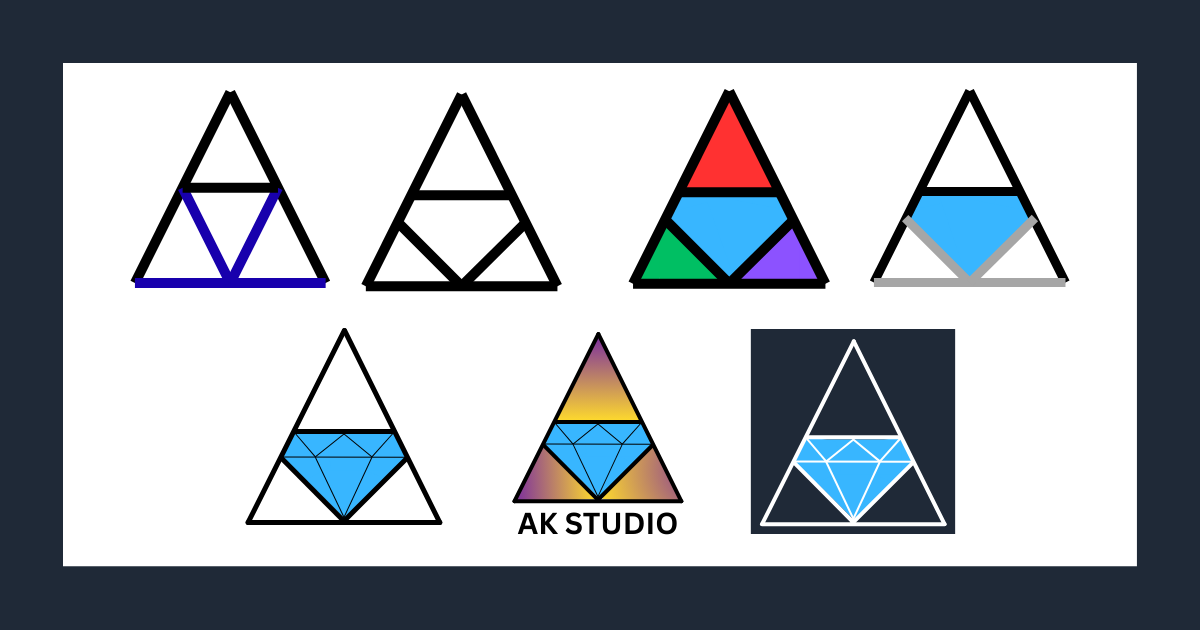
Then I used Claude to build a complete style guide since I'm better with functionality than aesthetics. We defined:
With those standards set, I could build consistently without decision fatigue on every page.
I built everything in Webflow: CMS collections, landing pages, service pages, site structure.
Then I discovered my design system didn't account for mobile. Everything looked great on desktop, broken on phones. Rookie mistake.
I fixed it by switching from pixels to REM units and adjusting every breakpoint manually. Tedious but necessary. The site now works properly on mobile, tablet, and desktop.
With responsive design solved, I connected my domain, implemented SEO fundamentals (metadata, Open Graph images), and tested across devices.
How would I actually execute on those five purposes?
Testing: Validate strategies on my own platform. AI optimization on my own content. Automation workflows in my own CMS. Document what works and what breaks.
Portfolio: Create case studies from past client work. Document process and impact while maintaining confidentiality.
Documentation: Share what I'm learning in real-time through blog posts. Break down tools I'm experimenting with, strategies I'm testing, and lessons from both wins and failures. Build a knowledge base that's useful for others navigating similar challenges.
Lead generation: Build in public. Share experiments. Be transparent about the messy middle, not just polished outcomes. This filters for clients who value process, exactly the work I want.
Personal hub: Launch with professional content first, then add the personal stuff over time. Movies I've watched, billiards projects, coffee opinions, things that have inspired me. Show up as a person, not just a marketing ops specialist.
I launched with this case study as proof of concept. More content comes as I create it. No pressure to have everything perfect on day one.
A complete digital platform that addresses all my original challenges:
Website & Technical
Brand & Design
Lead Generation
Content Foundation
Pages Built at Launch
Service Offerings Defined
Design Iterations
CMS Collections
Cups of Coffee
Website Built From Scratch
I now have a testing ground I completely control. Every strategy, tool, or workflow I recommend gets validated here first. If it breaks, only my site suffers. If it works, I have proof.
The portfolio problem is solving itself. I'm documenting past client work through case studies and building a body of work that compounds over time. Everything stays organized, accessible, under my control.
By building in public and sharing both experiments and process, I'm attracting exactly the type of freelance work I want: clients who see marketing technology as a tool to achieve business goals, not just features to implement.
Plan information architecture before aesthetics. Mapping content structure first prevented countless design revisions. The design now serves the content, not the other way around.
Lean on tools for weak spots. Using Claude for design decisions let me move fast in areas outside my expertise without compromising quality. No shame in that.
Ship incomplete and iterate publicly. Waiting for perfect means never launching. I launched with one blog post and one case study. More comes as I create it.
Start with a style guide page, not individual pages. Defining all design standards in one place first ensures consistency across mobile, tablet, and desktop from the start. Saves massive time later.
Whether you need a complete CRM overhaul or strategic guidance, I bring proven expertise.
Lets Talk About Your Project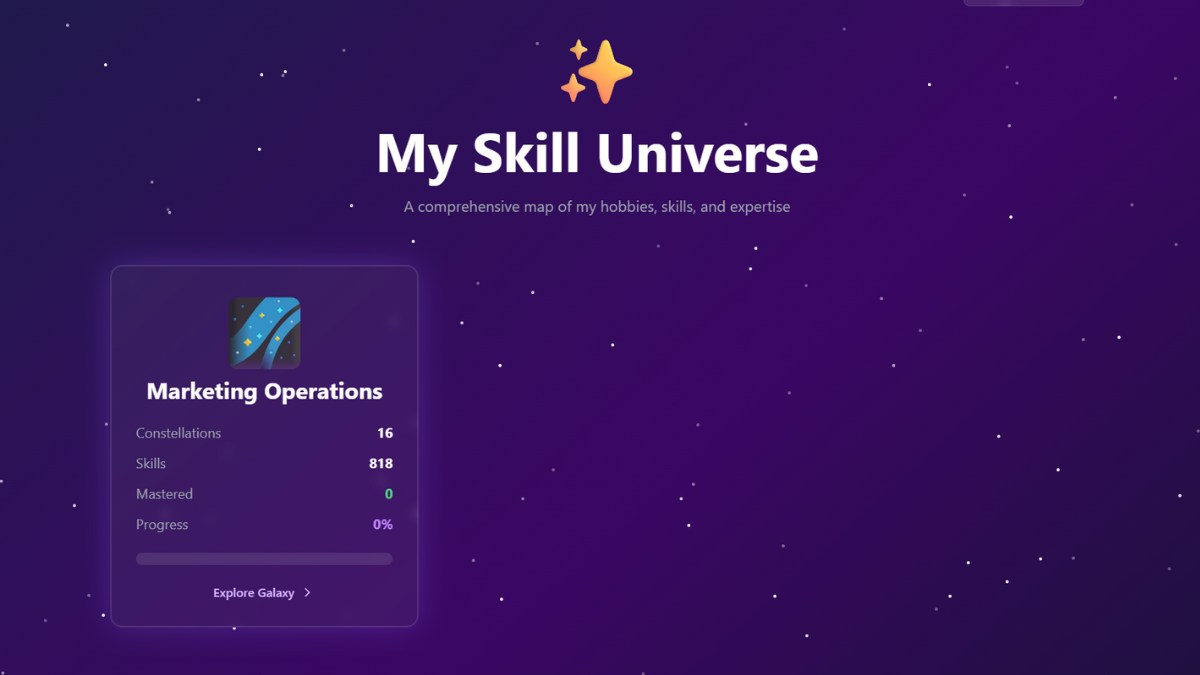
An interactive React application that organizes skills across professional and personal domains into a visual, navigable portfolio with evidence linking to real work.
Read More ->